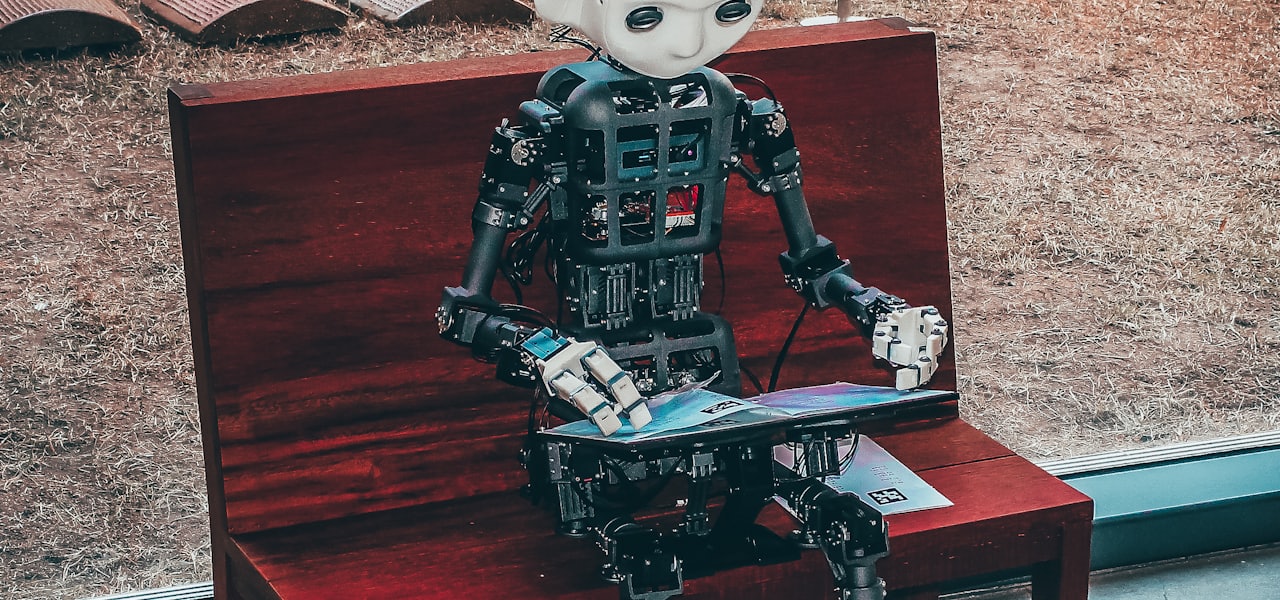
Niki was an artificial intelligence company headquartered in Bangalore, Karnataka. It was founded in May 2015 by IIT Kharagpur graduates Sachin Jaiswal, Keshav Prawasi, Shishir Modi, and Nitin Babel. The Niki android app was launched for a limited beta in June 2015, then released for public during YourStory's TechSparks 2015, and is a Tech30 company. The company raised an undisclosed amount in seed funding from Unilazer Ventures, a Mumbai-based VC firm founded by Ronnie Screwvala, in October 2015. This was followed by another seed funding round by Ratan Tata in May 2016. The company then raised US$2 million in Series A round of funding from SAP.iO, existing investors and some US and German-based investors, among others. Niki.ai shut down in October 2021 as per media reports. Website not working. == Product == The product is an artificial intelligence-powered chatbot which works as an intelligent personal assistant, named Niki. Leveraging natural language processing and machine learning, Niki presents a chat-based natural language user interface to the users where they can interact with Niki in their natural language. Niki understands how users chat in India, deciphers the words, in the context of product/services that they would like to purchase, and comes up with apt recommendations. Initially, it was only available on the Android platform as a mobile app. The company has expanded its operations to the Facebook Messenger and Apple iOS platforms. The company aims to soon be present on more messaging platforms like Slack and WhatsApp. The company currently provides 20+ services to over 2 million consumers, covering a wide spectrum ranging from utility services like mobile recharge, bill payments, travel services like cabs, buses, hotels and entertainment services like movies and events. Services such as flights and healthcare are also planned. == Partnerships == In September 2017, Infosys Finacle joined with Niki.ai to provide chat-based service to banking customers. In August 2017, Niki partnered with LazyPay to enable a 'buy now, pay later' feature for its users.
Alexis Spectral Data
Alexis Spectral Data is a software developed for colour matching processes that calculates from available spectral data the colour numbers used by computers to display colours on screen. It displays the colour for each spectral reflectance curve and records the calculated trichromatic values and colour numbers along with the spectral curves. This eliminates the need to scan the samples separately with a truecolour Scanner while creating the database. The spectral data can be introduced manually as a series of reflectance values at wavelengths measured in different standard illuminants with an arbitrary but fixed increment that must be kept for each spectral curve throughout the creation of the whole database. Therefore, older UV-VIS Spectrophotometers that can't be interfaced with computers can also be used for creating the database needed for colour matching. Alexis Spectral Data determines the whiteness degree in a less time-consuming method, which permits storage and easier handling of the obtained data. Alexis Spectral Data can export the trichromatic values, calculated from the spectral curves, to Alexis Analyser, software that handles only trichromatic data. The earliest information about the development of this software comes from a paper published by a student at the University Politehnica Bucharest in 1993. The software runs on Windows based computers but not on other operating systems.
Spatial anti-aliasing
In digital signal processing, spatial anti-aliasing is a technique for minimizing the distortion artifacts (aliasing) when representing a high-resolution image at a lower resolution. Anti-aliasing is used in digital photography, computer graphics, digital audio, and many other applications. Anti-aliasing means removing signal components that have a higher frequency than is able to be properly resolved by the recording (or sampling) device. This removal is done before (re)sampling at a lower resolution. When sampling is performed without removing this part of the signal, it causes undesirable artifacts such as black-and-white noise. In signal acquisition and audio, anti-aliasing is often done using an analog anti-aliasing filter to remove the out-of-band component of the input signal prior to sampling with an analog-to-digital converter. In digital photography, optical anti-aliasing filters made of birefringent materials smooth the signal in the spatial optical domain. The anti-aliasing filter essentially blurs the image slightly in order to reduce the resolution to or below that achievable by the digital sensor (the larger the pixel pitch, the lower the achievable resolution at the sensor level). == Examples == In computer graphics, anti-aliasing improves the appearance of "jagged" polygon edges, or "jaggies", so they are smoothed out on the screen. However, it incurs a performance cost for the graphics card and uses more video memory. The level of anti-aliasing determines how smooth polygon edges are (and how much video memory it consumes). Near the top of an image with a receding checker-board pattern, the image is difficult to recognise and often not considered aesthetically pleasing. In contrast, when anti-aliased the checker-board near the top blends into grey, which is usually the desired effect when the resolution is insufficient to show the detail. Even near the bottom of the image, the edges appear much smoother in the anti-aliased image. Multiple methods exist, including the sinc filter, which is considered a better anti-aliasing algorithm. When magnified, it can be seen how anti-aliasing interpolates the brightness of the pixels at the boundaries to produce grey pixels since the space is occupied by both black and white tiles. These help make the sinc filter antialiased image appear much smoother than the original. In a simple diamond image, anti-aliasing blends the boundary pixels; this reduces the aesthetically jarring effect of the sharp, step-like boundaries that appear in the aliased graphic. Anti-aliasing is often applied in rendering text on a computer screen, to suggest smooth contours that better emulate the appearance of text produced by conventional ink-and-paper printing. Particularly with fonts displayed on typical LCD screens, it is common to use subpixel rendering techniques like ClearType. Sub-pixel rendering requires special colour-balanced anti-aliasing filters to turn what would be severe colour distortion into barely-noticeable colour fringes. Equivalent results can be had by making individual sub-pixels addressable as if they were full pixels, and supplying a hardware-based anti-aliasing filter as is done in the OLPC XO-1 laptop's display controller. Pixel geometry affects all of this, whether the anti-aliasing and sub-pixel addressing are done in software or hardware. == Simplest approach to anti-aliasing == The most basic approach to anti-aliasing a pixel is determining what percentage of the pixel is occupied by a given region in the vector graphic - in this case a pixel-sized square, possibly transposed over several pixels - and using that percentage as the colour. A Python program producing a basic plot of a single, white-on-black anti-aliased point using the method is as follows: This method is generally best suited for simple graphics, such as basic lines or curves, and applications that would otherwise have to convert absolute coordinates to pixel-constrained coordinates, such as 3D graphics. It is a fairly fast function, but it is relatively low-quality, and gets slower as the complexity of the shape increases. For purposes requiring very high-quality graphics or very complex vector shapes, this will probably not be the best approach. Note: The plot_antialiased_point routine above cannot blindly set the colour value to the percent calculated. It must add the new value to the existing value at that location up to a maximum of 1. Otherwise, the brightness of each pixel will be equal to the darkest value calculated in time for that location which produces a very bad result. For example, if one point sets a brightness level of 0.90 for a given pixel and another point calculated later barely touches that pixel and has a brightness of 0.05, the final value set for that pixel should be 0.95, not 0.05. For more sophisticated shapes, the algorithm may be generalized as rendering the shape to a pixel grid with higher resolution than the target display surface (usually a multiple that is a power of 2 to reduce distortion), then using bicubic interpolation to determine the average intensity of each real pixel on the display surface. == Signal processing approach to anti-aliasing == In this approach, the ideal image is regarded as a signal. The image displayed on the screen is taken as samples, at each (x,y) pixel position, of a filtered version of the signal. Ideally, one would understand how the human brain would process the original signal, and provide an on-screen image that will yield the most similar response by the brain. The most widely accepted analytic tool for such problems is the Fourier transform; this decomposes a signal into basis functions of different frequencies, known as frequency components, and gives us the amplitude of each frequency component in the signal. The waves are of the form: cos ( 2 j π x ) cos ( 2 k π y ) {\displaystyle \ \cos(2j\pi x)\cos(2k\pi y)} where j and k are arbitrary non-negative integers. There are also frequency components involving the sine functions in one or both dimensions, but for the purpose of this discussion, the cosine will suffice. The numbers j and k together are the frequency of the component: j is the frequency in the x direction, and k is the frequency in the y direction. The goal of an anti-aliasing filter is to greatly reduce frequencies above a certain limit, known as the Nyquist frequency, so that the signal will be accurately represented by its samples, or nearly so, in accordance with the sampling theorem; there are many different choices of detailed algorithm, with different filter transfer functions. Current knowledge of human visual perception is not sufficient, in general, to say what approach will look best. == Two dimensional considerations == The previous discussion assumes that the rectangular mesh sampling is the dominant part of the problem. The filter usually considered optimal is not rotationally symmetrical, as shown in this first figure; this is because the data is sampled on a square lattice, not using a continuous image. This sampling pattern is the justification for doing signal processing along each axis, as it is traditionally done on one dimensional data. Lanczos resampling is based on convolution of the data with a discrete representation of the sinc function. If the resolution is not limited by the rectangular sampling rate of either the source or target image, then one should ideally use rotationally symmetrical filter or interpolation functions, as though the data were a two dimensional function of continuous x and y. The sinc function of the radius has too long a tail to make a good filter (it is not even square-integrable). A more appropriate analog to the one-dimensional sinc is the two-dimensional Airy disc amplitude, the 2D Fourier transform of a circular region in 2D frequency space, as opposed to a square region. One might consider a Gaussian plus enough of its second derivative to flatten the top (in the frequency domain) or sharpen it up (in the spatial domain), as shown. Functions based on the Gaussian function are natural choices, because convolution with a Gaussian gives another Gaussian whether applied to x and y or to the radius. Similarly to wavelets, another of its properties is that it is halfway between being localized in the configuration (x and y) and in the spectral (j and k) representation. As an interpolation function, a Gaussian alone seems too spread out to preserve the maximum possible detail, and thus the second derivative is added. As an example, when printing a photographic negative with plentiful processing capability and on a printer with a hexagonal pattern, there is no reason to use sinc function interpolation. Such interpolation would treat diagonal lines differently from horizontal and vertical lines, which is like a weak form of aliasing. == Practical real-time anti-aliasing approximations == There are only a handful of primitives used at the lowest level in a real-time rend
Avizo (software)
Avizo (pronounce: 'a-VEE-zo') is a general-purpose commercial software application for scientific and industrial data visualization and analysis. Avizo is developed by Thermo Fisher Scientific and was originally designed and developed by the Visualization and Data Analysis Group at Zuse Institute Berlin (ZIB) under the name Amira. Avizo was commercially released in November 2007. For the history of its development, see the Wikipedia article about Amira. == Overview == Avizo is a software application which enables users to perform interactive visualization and computation on 3D data sets. The Avizo interface is modelled on the visual programming. Users manipulate data and module components, organized in an interactive graph representation (called Pool), or in a Tree view. Data and modules can be interactively connected together, and controlled with several parameters, creating a visual processing network whose output is displayed in a 3D viewer. With this interface, complex data can be interactively explored and analyzed by applying a controlled sequence of computation and display processes resulting in a meaningful visual representation and associated derived data. == Application areas == Avizo has been designed to support different types of applications and workflows from 2D and 3D image data processing to simulations. It is a versatile and customizable visualization tool used in many fields: Scientific visualization Materials Research Tomography, Microscopy, etc. Nondestructive testing, Industrial Inspection, and Visual Inspection Computer-aided Engineering and simulation data post-processing Porous medium analysis Civil Engineering Seismic Exploration, Reservoir Engineering, Microseismic Monitoring, Borehole Imaging Geology, Digital Rock Physics (DRP), Earth Sciences Archaeology Food technology and agricultural science Physics, Chemistry Climatology, Oceanography, Environmental Studies Astrophysics == Features == Data import: 2D and 3D image stack and volume data: from microscopes (electron, optical), X-ray tomography (CT, micro-/nano-CT, synchrotron), neutron tomography and other acquisition devices (MRI, radiography, GPR) Geometric models (such as point sets, line sets, surfaces, grids) Numerical simulation data (such as Computational fluid dynamics or Finite element analysis data) Molecular data Time series and animations Seismic data Well logs 4D Multivariate Climate Models 2D/3D data visualization: Volume rendering Digital Volume Correlation Visualization of sections, through various slicing and clipping methods Isosurface rendering Polygonal meshes Scalar fields, Vector fields, Tensor representations, Flow visualization (Illuminated Streamlines, Stream Ribbons) Image processing: 2D/3D Alignment of image slices, Image registration Image filtering Mathematical Morphology (erode, dilate, open, close, tophat) Watershed Transform, Distance Transform Image segmentation 3D models reconstruction: Polygonal surface generation from segmented objects Generation of tetrahedral grids Surface reconstruction from point clouds Skeletonization (reconstruction of dendritic, porous or fracture network) Surface model simplification Quantification and analysis: Measurements and statistics Analysis spreadsheet and charting Material properties computation, based on 3D images: Absolute permeability Thermal conductivity Molecular diffusivity Electrical resistivity/formation factor 3D image-based meshing for CFD and FEA: From 3D imaging modalities (CT, micro-CT, MRI, etc.) Surface and volume meshes generation Export to FEA and CFD solvers for simulation Post-processing for simulation analysis Presentation, automation: MovieMaker, Multiscreen, Video wall, collaboration, and VR support TCL Scripting, C++ extension API Avizo is based on Open Inventor 3D graphics toolkits (FEI Visualization Sciences Group).
Seam carving
Seam carving (or liquid rescaling) is an algorithm for content-aware image resizing, developed by Shai Avidan, of Mitsubishi Electric Research Laboratories (MERL), and Ariel Shamir, of the Interdisciplinary Center and MERL. It functions by establishing a number of seams (paths of least importance) in an image and automatically removes seams to reduce image size or inserts seams to extend it. Seam carving also allows manually defining areas in which pixels may not be modified, and features the ability to remove whole objects from photographs. The purpose of the algorithm is image retargeting, which is the problem of displaying images without distortion on media of various sizes (cell phones, projection screens) using document standards, like HTML, that already support dynamic changes in page layout and text but not images. Image Retargeting was invented by Vidya Setlur, Saeko Takage, Ramesh Raskar, Michael Gleicher and Bruce Gooch in 2005. The work by Setlur et al. won the 10-year impact award in 2015. == Seams == Seams can be either vertical or horizontal. A vertical seam is a path of pixels connected from top to bottom in an image with one pixel in each row. A horizontal seam is similar with the exception of the connection being from left to right. The importance/energy function values a pixel by measuring its contrast with its neighbor pixels. == Process == The below example describes the process of seam carving: The seams to remove depends only on the dimension (height or width) one wants to shrink. It is also possible to invert step 4 so the algorithm enlarges in one dimension by copying a low energy seam and averaging its pixels with its neighbors. === Computing seams === Computing a seam consists of finding a path of minimum energy cost from one end of the image to another. This can be done via Dijkstra's algorithm, dynamic programming, greedy algorithm or graph cuts among others. ==== Dynamic programming ==== Dynamic programming is a programming method that stores the results of sub-calculations in order to simplify calculating a more complex result. Dynamic programming can be used to compute seams. If attempting to compute a vertical seam (path) of lowest energy, for each pixel in a row we compute the energy of the current pixel plus the energy of one of the three possible pixels above it. The images below depict a DP process to compute one optimal seam. Each square represents a pixel, with the top-left value in red representing the energy value of that pixel. The value in black represents the cumulative sum of energies leading up to and including that pixel. The energy calculation is trivially parallelized for simple functions. The calculation of the DP array can also be parallelized with some interprocess communication. However, the problem of making multiple seams at the same time is harder for two reasons: the energy needs to be regenerated for each removal for correctness and simply tracing back multiple seams can form overlaps. Avidan 2007 computes all seams by removing each seam iteratively and storing an "index map" to record all the seams generated. The map holds a "nth seam" number for each pixel on the image, and can be used later for size adjustment. If one ignores both issues however, a greedy approximation for parallel seam carving is possible. To do so, one starts with the minimum-energy pixel at one end, and keep choosing the minimum energy path to the other end. The used pixels are marked so that they are not picked again. Local seams can also be computed for smaller parts of the image in parallel for a good approximation. == Issues == The algorithm may need user-provided information to reduce errors. This can consist of painting the regions which are to be preserved. With human faces it is possible to use face detection. Sometimes the algorithm, by removing a low energy seam, may end up inadvertently creating a seam of higher energy. The solution to this is to simulate a removal of a seam, and then check the energy delta to see if the energy increases (forward energy). If it does, prefer other seams instead. == Implementations == Adobe Systems acquired a non-exclusive license to seam carving technology from MERL, and implemented it as a feature in Photoshop CS4, where it is called Content Aware Scaling. As the license is non-exclusive, other popular computer graphics applications (e. g. GIMP, digiKam, and ImageMagick) as well as some stand-alone programs (e. g. iResizer) also have implementations of this technique, some of which are released as free and open source software. There also exists an implementation for webpages. == Improvements and extensions == Better energy function and application to video by introducing 2D (time+1D) seams. Faster implementation on GPU. Application of this forward energy function to static images. Multi-operator: Combine with cropping and scaling. Much faster removal of multiple seams. Removing seams through neural deformation fields to extend to continuous domains like 3D scenes. A 2010 review of eight image retargeting methods found that seam carving produced output that was ranked among the worst of the tested algorithms. It was, however, a part of one of the highest-ranking algorithms: the multi-operator extension mentioned above (combined with cropping and scaling).
Alice AI (AI model family)
Alice AI is a neural network family developed by the Russian company Yandex LLC. Alice AI can create and revise texts, generate new ideas and capture the context of the conversation with the user. Alice AI is trained using a dataset which includes information from books, magazines, newspapers and other open sources available on the internet. The neural network may get facts wrong and hallucinate, but as it learns, it will produce increasingly accurate answers. == Usage == YandexGPT is integrated into virtual assistant Alice (an analog of Siri and Alexa) and is available in Yandex services and applications. The company gives businesses access to the neural network’s API through the public cloud platform Yandex Cloud and develops its own B2B solutions on its basis. Since July 2023, 800 companies have participated in the closed testing of YandexGPT. IT developers, banks, retail businesses, and companies from other industries can use the technology in two modes — API and Playground (an interface in the Yandex Cloud console for testing models and hypotheses). Two model versions are available to businesses: one works in asynchronous mode and is better able to handle complex tasks, while the other is suitable for creating quick responses in real time. As a result, YandexGPT has been tested in dozens of scenarios such as content tasks, tech support, creating chatbots, virtual assistants, etc. == History == In February 2023, Yandex announced that it was working on its own version of the ChatGPT generative neural network while developing a language model from the YaLM (Yet another Language Model) family. The project was tentatively named YaLM 2.0, which was later changed to YandexGPT. On May 17, the company unveiled a neural network called YandexGPT (YaGPT) and enabled its virtual assistant Alice to interact with the new language model. On June 15, 2023, Yandex added the YandexGPT language model to the image generation application Shedevrum. This enabled its users to create fully-fledged posts complete with a title, text, and relevant illustration. In July 2023, YandexGPT launched new features enabling businesses to create virtual assistants and chatbots, as well as generate and structure texts. On September 7, 2023, Yandex presented a new version of the language model, YandexGPT 2, at the Practical ML Conf. Compared to the previous one, the new version is able to perform more types of tasks, and the quality of answers has improved. The developers claimed that YandexGPT 2 answered user questions better than the first version in 67% of cases. From October 6, 2023, YandexGPT can create short retellings of online Russian-language videos on the Internet. It can summarize videos that are from two minutes to four hours long and contain speech.
Normalization (image processing)
In image processing, normalization is a process that changes the range of pixel intensity values, a kind of intensity mapping. Applications include photographs with poor contrast due to glare, for example. A typical case is contrast stretching. In more general fields of data processing, such as digital signal processing, it is referred to as dynamic range expansion. The purpose of dynamic range expansion in the various applications is usually to bring the image, or other type of signal, into a range that is more familiar or normal to the senses, hence the term normalization. Often, the motivation is to achieve consistency in dynamic range for a set of data, signals, or images to avoid mental distraction or fatigue. For example, a newspaper will strive to make all of the images in an issue share a similar range of grayscale. Auto-normalization in image processing software typically normalizes to the full dynamic range of the number system specified in the image file format. == Definition == Normalization transforms an n-dimensional grayscale image I : { X ⊆ R n } → { Min , . . , Max } {\displaystyle I:\{\mathbb {X} \subseteq \mathbb {R} ^{n}\}\rightarrow \{{\text{Min}},..,{\text{Max}}\}} with intensity values in the range ( Min , Max ) {\displaystyle ({\text{Min}},{\text{Max}})} , into a new image I N : { X ⊆ R n } → { newMin , . . , newMax } {\displaystyle I_{N}:\{\mathbb {X} \subseteq \mathbb {R} ^{n}\}\rightarrow \{{\text{newMin}},..,{\text{newMax}}\}} with intensity values in the range ( newMin , newMax ) {\displaystyle ({\text{newMin}},{\text{newMax}})} . The linear normalization of a grayscale digital image is performed according to the formula I N = ( I − Min ) newMax − newMin Max − Min + newMin {\displaystyle I_{N}=(I-{\text{Min}}){\frac {{\text{newMax}}-{\text{newMin}}}{{\text{Max}}-{\text{Min}}}}+{\text{newMin}}} For example, if the intensity range of the image is 50 to 180 and the desired range is 0 to 255 the process entails subtracting 50 from each of pixel intensity, making the range 0 to 130. Then each pixel intensity is multiplied by 255/130, making the range 0 to 255. Normalization might also be non-linear, as the relationship between I {\displaystyle I} and I N {\displaystyle I_{N}} may not be linear. An example of non-linear normalization is when the normalization follows a sigmoid function, in which case the normalized image is computed according to the formula I N = ( newMax − newMin ) 1 1 + e − I − β α + newMin {\displaystyle I_{N}=({\text{newMax}}-{\text{newMin}}){\frac {1}{1+e^{-{\frac {I-\beta }{\alpha }}}}}+{\text{newMin}}} Where α {\displaystyle \alpha } defines the width of the input intensity range, and β {\displaystyle \beta } defines the intensity around which the range is centered. Gamma correction (log/inverse log) is also a common transformation function. === Colorspace === Intensity operations generally operate on a colorspace that maps to the human perception of lightness without intentionally changing the other properties. This can be done, for example, by operating on the L component of the CIELAB color space, or approximately by operating on the Y component of YCbCr. It is also possible to operate on each of the RGB color channels, though the result will not always make sense. == Contrast stretching == This is the most significant and essential technique of spatial-based image enhancement. The basic intent of this contrast enhancement technique is to adjust the local contrast in the image so as to bring out the clear regions or objects in the image. Low-contrast images often result from poor or non-uniform lighting conditions, a limited dynamic range of the imaging sensor, or improper settings of the lens aperture. This operation tries to change the intensity of the pixel in the image, particularly in the input image, to obtain an enhanced image. It is based on the number of techniques, namely local, global, dark and bright levels of contrast. The contrast enhancement is considered as the amount of color or gray differentiation that lies among the different features in an image. The contrast enhancement improves the quality of image by increasing the luminance difference between the foreground and background. A contrast stretching transformation can be achieved by: Stretching the dark range of input values into a wider range of output values: This involves increasing the brightness of the darker areas in the image to enhance details and improve visibility. Shifting the mid-range of input values: This involves adjusting the brightness levels of the mid-tones in the image to improve overall contrast and clarity. Compressing the bright range of input values: This process involves reducing the brightness of the brighter areas in the image to prevent overexposure resulting in a more balanced and visually appealing image. It can be described as the following piecewise funciton: I N = { s 1 r 1 I if I < r 1 s 2 − s 1 r 1 − r 2 ( I − r 1 ) if r 1 ≤ I ≤ r 2 1 − s 2 1 − r 2 ( I − r 2 ) if I > r 2 {\displaystyle I_{N}={\begin{cases}{\frac {s_{1}}{r_{1}}}I&{\text{if }}I